
Natural stone has long been valued in architecture for its texture, character and timeless appearance. However, traditional thick stone can introduce considerable weight and may require additional structural planning, depending on the application. A thin stone veneer panel offers an alternative for projects seeking the visual appeal of natural stone in a thinner surface format.
From contemporary building façades to feature walls and premium interiors, thin stone veneer can provide design flexibility for architects, interior designers and construction professionals. The right solution depends on the stone material, backing system, installation method and project requirements.
What Is a Thin Stone Veneer Panel?
A thin stone veneer panel is a decorative architectural surface made using a relatively thin layer of natural stone or, in some products, manufactured stone. It is designed to create the appearance of stone cladding without using a full-thickness solid stone piece.
Natural stone options may include marble, limestone, granite and travertine. Depending on the product, the stone layer can be installed over a suitable substrate or incorporated into an engineered panel system.
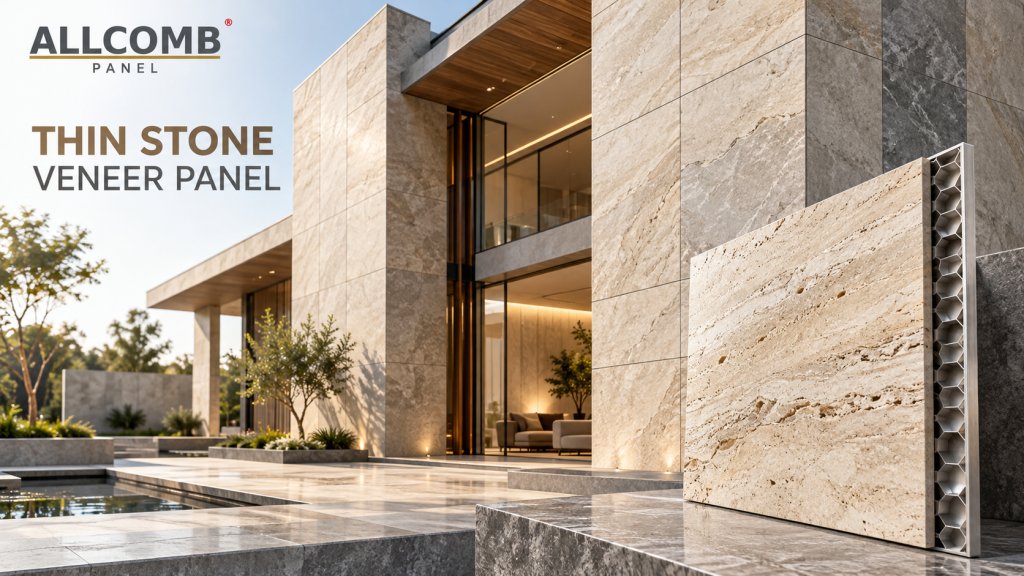
Some advanced systems combine a thin natural stone surface with an engineered backing, such as an aluminium honeycomb core. This construction can help reduce overall panel weight compared with certain traditional stone constructions. Performance varies according to the complete panel design.
Key Benefits of Thin Stone Veneer Panels
1. Natural Stone Appearance
Thin stone veneer retains the distinctive patterns, colours and textures associated with natural stone. Each stone type offers a different aesthetic, making it possible to create contemporary, classic or minimalist architectural designs.
2. Potential Weight Reduction
Using a thinner stone layer can reduce material weight compared with thicker solid stone. Engineered backing systems may provide further weight-saving opportunities, depending on the panel specification.
Lower weight can help with handling and installation planning, although the complete system must still meet project-specific requirements.
Compared with thicker solid-stone constructions, selected thin veneer systems can help reduce material weight. For a broader understanding of weight-saving solutions, read our guide to Lightweight Stone Panels and their role in modern architecture.
3. Design Flexibility
Thin stone veneer panels can be considered for a variety of design styles, from understated limestone interiors to striking marble feature walls. Panel dimensions, finishes and edge details depend on the chosen product and fabrication capabilities.
4. Versatile Applications
Depending on the material and approved installation system, thin stone veneer may be suitable for selected interior walls, reception areas, hospitality spaces, retail interiors and exterior cladding projects.
Where Can Thin Stone Veneer Panels Be Used?
Thin stone veneer offers several architectural possibilities.
Interior applications: Feature walls, hotel lobbies, reception desks, residential living areas, restaurants, retail spaces and corporate interiors can benefit from the natural texture of stone.
Exterior applications: Selected façade systems, entrance features and architectural elevations may use thin stone veneer when the stone, backing, fixing method and weather exposure requirements have been properly assessed.
For exterior projects, designers should verify wind-load requirements, moisture management, thermal movement, fire performance and the suitability of the complete cladding assembly.
Thin Stone Veneer vs Traditional Stone
The main difference is the thickness and construction of the material. Traditional solid stone generally uses a thicker, heavier stone section, while thin stone veneer uses a thinner decorative layer.
This difference may influence weight, handling, installation requirements and the supporting structure. However, thin veneer is not automatically suitable for every application, and some products require specific substrates or mechanical fixing systems.
A conventional veneer attached to a substrate is also different from an engineered stone honeycomb panel. In a honeycomb system, a thin stone surface may be bonded to a specially designed backing structure. This can create a lightweight panel solution, but it must be designed and tested for its intended use.
Choosing the Right Thin Stone Veneer Panel
Before selecting a panel, consider the following factors:
- Stone type: Choose marble, limestone, granite or another material based on the desired appearance and performance.
- Panel construction: Understand the stone thickness, backing material, bonding system and overall panel dimensions.
- Installation method: Confirm substrate compatibility, fixing requirements, joint details and installation procedures.
- Application environment: Assess moisture, temperature changes, weather exposure and maintenance requirements.
- Safety and performance: Verify relevant fire, structural, durability and façade-system requirements for the project.
Working with an experienced manufacturer can help align material selection and fabrication with the design intent.
Thin Stone Veneer and ALLCOMB PANEL
ALLCOMB PANEL specialises in engineered architectural panel solutions that combine selected surface materials with honeycomb-core technology. For projects seeking the appearance of natural stone with a lightweight panel construction, stone honeycomb systems may be worth evaluating alongside conventional veneer options.
The appropriate solution depends on the selected stone, panel design, application and project specifications. Early coordination between the architect, manufacturer, installer and project team can help establish the right construction.
Conclusion
A thin stone veneer panel offers architects and designers a way to incorporate natural stone aesthetics into a wide range of contemporary spaces. Its potential advantages include a thinner material profile, design flexibility and opportunities for weight reduction.
The best choice depends on whether the project requires conventional thin veneer or an engineered panel system with specialised backing. Evaluating the complete construction, installation method and performance requirements helps ensure the selected solution is appropriate for the intended application.
FAQ’s
1. What is a thin stone veneer panel?
It is an architectural panel or surface featuring a thin layer of natural or manufactured stone, used to achieve a stone finish without relying on full-thickness solid stone.
2. Are thin stone veneer panels lightweight?
They can weigh less than comparable thick stone constructions. Actual weight depends on stone thickness, backing material, panel size and the complete system.
3. Can thin stone veneer panels be used on exterior walls?
Some systems are suitable for exterior applications, provided the stone, backing, fixings and complete installation system meet the relevant project and exposure requirements.
4. What is the difference between thin stone veneer and stone honeycomb panels?
Thin stone veneer describes a thin stone surface. A stone honeycomb panel incorporates a thin stone layer into an engineered panel construction that may use an aluminium honeycomb core.
5. Which stone types are used for thin stone veneer?
Common options include marble, limestone, granite and travertine. Availability and suitability vary by product and application.