
Natural stone has always had a strong place in architecture. Marble, limestone, granite, travertine and other stones bring natural colour, texture and character to façades and interiors.
The challenge is that traditional stone construction can become heavy when used across large architectural surfaces.
A natural stone honeycomb panel offers an engineered approach to this challenge. It combines a thin natural,stone surface with a lightweight honeycomb backing structure, creating a panel designed to retain the appearance of natural stone while reducing the amount of solid stone used in the overall construction.
For architects, designers, contractors and developers, this combination can provide another option when evaluating premium stone finishes for modern projects.
What Is a Natural Stone Honeycomb Panel?
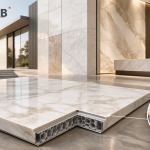
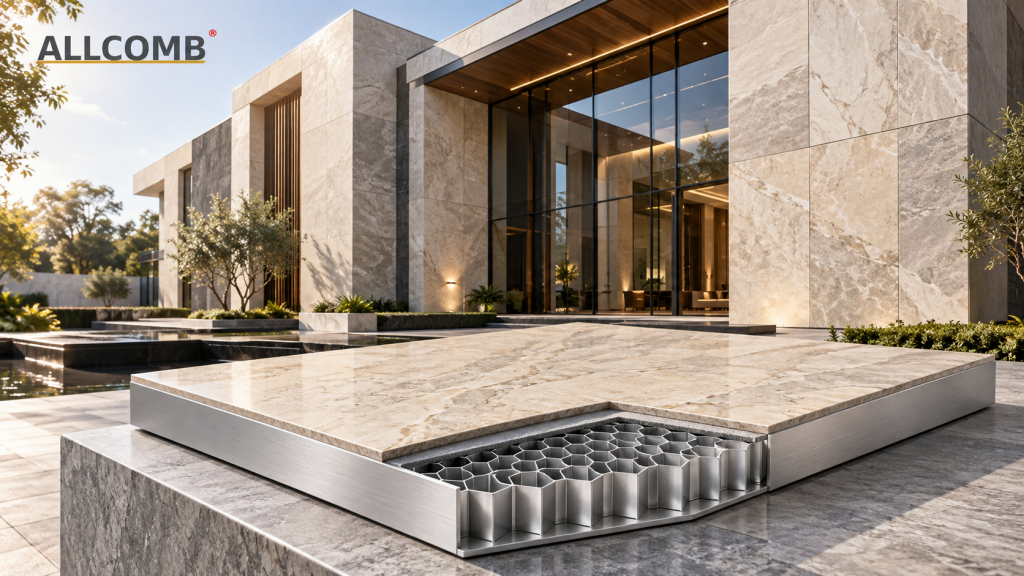
A natural stone honeycomb panel is a composite architectural panel made by combining natural stone with an aluminium honeycomb core and backing system.
A typical construction may include:
Natural stone surface
Bonding layer
Aluminium honeycomb core
Aluminium backing or engineered backing structure
The honeycomb core contains a series of lightweight hexagonal cells. When combined with the face material and backing, the structure creates a panel designed to provide rigidity without relying on solid stone throughout its entire thickness.
The visible natural stone remains the architectural finish, while the engineered backing forms an important part of the panel construction.
How Does a Natural Stone Honeycomb Panel Work?
The principle is based on sandwich,panel construction.
A thin natural,stone layer forms the visible surface. Behind this is a honeycomb core that separates and supports the face and backing layers.
The cellular geometry allows the panel to achieve useful rigidity while keeping the construction relatively lightweight.
This creates a combination of:
Natural stone aesthetics + lightweight construction + engineered panel technology
The final performance depends on the complete panel design, including the stone, core, bonding system, backing and fixing method.
Key Benefits of Natural Stone Honeycomb Panels
- Lightweight Natural Stone Construction
One of the main reasons to consider honeycomb,backed stone is weight.
Instead of using a thick solid stone element throughout the panel, a thinner stone surface can be combined with a lightweight core.
This can reduce the weight associated with the finished panel and may make transportation, handling and installation more manageable.
For large architectural projects, this can be an important consideration when planning the overall wall or façade system.
- Authentic Natural Stone Appearance
The primary visible surface remains natural stone.
This means architects can work with the natural variation, colour and veining that make stone desirable in premium architecture.
Depending on the selected material, a project can achieve anything from subtle limestone textures to dramatic marble patterns.
- Large,Format Design Possibilities
Natural stone honeycomb panels can be considered for large,format architectural surfaces.
Large panels can help create a clean visual composition with carefully planned joints and detailing.
This can be particularly useful for contemporary façades, luxury interiors and feature walls.
Actual panel dimensions should be determined according to the manufacturer’s capabilities and the engineering requirements of the project.
- Easier Material Handling
Reducing the weight of a stone panel can simplify certain stages of transportation and on,site handling.
This may be particularly relevant for large projects where multiple panels need to be moved and installed efficiently.
The exact installation requirements will depend on the panel design and fixing system.
- Design Versatility
Natural stone honeycomb panels can potentially be used with different stone varieties, finishes and panel dimensions.
This gives architects flexibility to create different architectural expressions while using the same basic lightweight panel concept.
What Natural Stones Can Be Used?
The appropriate stone depends on the manufacturer’s panel technology and the project requirements.
Potential options can include:
Marble
Limestone
Granite
Travertine
Slate
Sandstone
Each natural stone has its own density, porosity, strength, colour variation and surface characteristics.
Therefore, stone selection should be considered together with the complete honeycomb,panel construction.
A stone that looks suitable aesthetically must also be evaluated for its suitability within the intended panel system and application.
read more: marble honeycomb panel
Where Are Natural Stone Honeycomb Panels Used?
Exterior Applications
Natural stone honeycomb panels can be considered for architectural exterior applications such as:
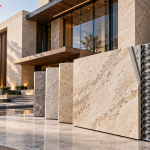
Building façades
Commercial developments
Hotels and resorts
Residential buildings
Institutional buildings
Entrance features
Architectural accent walls
For exterior use, the complete system should be assessed for structural loading, environmental exposure, fixing, fire performance and other applicable project requirements.
Interior Applications
Inside buildings, natural stone panels can be used for:
Hotel lobbies
Reception areas
Feature walls
Luxury residential interiors
Retail environments
Restaurants
Corporate interiors
Decorative wall surfaces
The combination of natural stone and lightweight construction can be particularly relevant where designers want a premium stone finish without relying on heavy solid,stone construction.
Natural Stone Honeycomb Panels vs Traditional Stone
The biggest difference is the internal construction.
Traditional stone cladding can involve thick or full,depth stone elements. A natural stone honeycomb panel uses a thinner natural,stone surface combined with an engineered backing system.
This can provide advantages when weight and handling are important considerations.
However, a honeycomb panel should not automatically be considered a replacement for every traditional stone application.
The appropriate solution depends on:
Project design
Structural requirements
Stone selection
Panel dimensions
Fixing method
Environmental exposure
Fire,performance requirements
Installation conditions
The complete system should therefore be evaluated before specification.
Read more: “Natural Stone Honeycomb Panels vs Traditional Stone.”
How to Choose a Natural Stone Honeycomb Panel
Architects and contractors should consider several factors before selecting a panel system.
Stone
Evaluate the stone type, appearance, thickness, quality and suitability for the intended application.
Honeycomb Core
Consider core material, cell size, density and thickness according to the required panel design.
Bonding System
The bonding method between the natural stone, core and backing is an important part of the complete panel construction.
Panel Size
Large,format panels can create an impressive architectural appearance, but dimensions need to be determined according to engineering and manufacturing capabilities.
Application
Interior and exterior applications can have very different environmental and performance requirements.
Fixing System
The panel and fixing method should be designed together rather than treated as separate components.
Why Consider Natural Stone Honeycomb Panels for Modern Architecture?
Modern architectural projects increasingly seek materials that combine visual quality with efficient construction.
Natural stone honeycomb panels address this concept by combining the aesthetic qualities of natural stone with lightweight engineered construction.
For projects where large,format stone, reduced weight and practical handling are important considerations, this type of panel can be an alternative worth evaluating.
AllComb Panel develops lightweight composite architectural systems using natural materials such as stone together with advanced honeycomb,core technology. Its capabilities include custom fabrication and engineering support for architectural applications.
Conclusion
A natural stone honeycomb panel combines a natural,stone surface with a lightweight aluminium honeycomb backing system.
The concept provides architects and designers with a way to explore natural stone for modern façades, interiors and feature surfaces while considering weight, handling and installation requirements.
Its advantages come from the complete engineered construction rather than the stone surface alone.
Stone selection, honeycomb,core specification, bonding, backing, panel dimensions and fixing methods should all be evaluated together.
For modern architectural projects looking for a balance between natural stone aesthetics and lightweight panel construction, natural stone honeycomb panels offer a practical system worth considering.
FAQs
What is a natural stone honeycomb panel?
A natural stone honeycomb panel is a composite architectural panel that combines a thin natural,stone surface with an aluminium honeycomb core and backing system.
Are natural stone honeycomb panels lightweight?
They are designed to be significantly lighter than comparable full,depth stone constructions because the panel uses a thinner stone surface combined with a lightweight honeycomb core.
What stones can be used in honeycomb panels?
Depending on the manufacturer and panel system, natural stones such as marble, limestone, granite, travertine, slate and sandstone may be considered.
Can natural stone honeycomb panels be used for building façades?
They can be considered for façade applications when the complete panel and fixing system are properly engineered for the project’s structural, environmental and performance requirements.
Can natural stone honeycomb panels be used indoors?
Yes. Potential interior applications include feature walls, hotel lobbies, reception areas, luxury residences, retail environments and restaurants.
What is the difference between a natural stone honeycomb panel and a solid stone slab?
A solid stone slab consists primarily of stone throughout its thickness. A natural stone honeycomb panel uses a thinner stone surface combined with a lightweight engineered backing structure.
Are all natural stones suitable for honeycomb panels?
No. Stone selection depends on the properties of the material and its suitability for the specific panel construction and intended application.
What should I consider before specifying a natural stone honeycomb panel?
Consider the stone, stone thickness, honeycomb core, bonding system, backing, panel dimensions, fixing method, environmental conditions, fire requirements and applicable testing or certifications.