
A building’s exterior plays an important role in its appearance, protection and overall architectural identity. Exterior wall cladding panels help architects and designers create contemporary façades while selecting materials suited to the building’s functional and environmental requirements.
From commercial buildings and hotels to residential developments and institutional spaces, exterior cladding systems are available in different materials, finishes and constructions. Choosing the right panel requires consideration of appearance, weight, weather exposure, installation methods and long-term maintenance.
What Are Exterior Wall Cladding Panels?
Exterior wall cladding panels are materials installed over a building’s external walls to create a finished façade. Depending on the system, cladding may provide a decorative surface, help manage exposure to weather and form part of a larger building-envelope assembly.
Common options include aluminium composite panels, metal panels, porcelain panels, natural stone cladding and engineered lightweight panels. Each material offers different design possibilities and performance characteristics.
Cladding is not automatically a substitute for waterproofing or insulation. The performance of the complete wall assembly depends on its design, joints, fixings, drainage, insulation and installation quality.
Types of Exterior Wall Cladding Panels
1. Aluminum and Metal Cladding Panels
Aluminium and other metal panels are used in contemporary architecture for their clean appearance and flexibility in shaping façade designs. They can suit commercial buildings, offices, retail developments and modern residential projects. Material grade, coating and system design influence their suitability for particular environments.
2. Natural Stone Cladding Panels
Natural stone cladding offers distinctive textures, colours and patterns. Marble, limestone and granite are among the materials used in architectural façades. Stone selection should account for weight, fixing requirements, moisture exposure and the properties of the selected stone.
3. Porcelain Cladding Panels
Porcelain panels provide a refined surface with a range of colours, patterns and finishes. They can be considered for contemporary façades where the specified product and installation system meet the project’s technical requirements.
4. Aluminum Honeycomb Panels
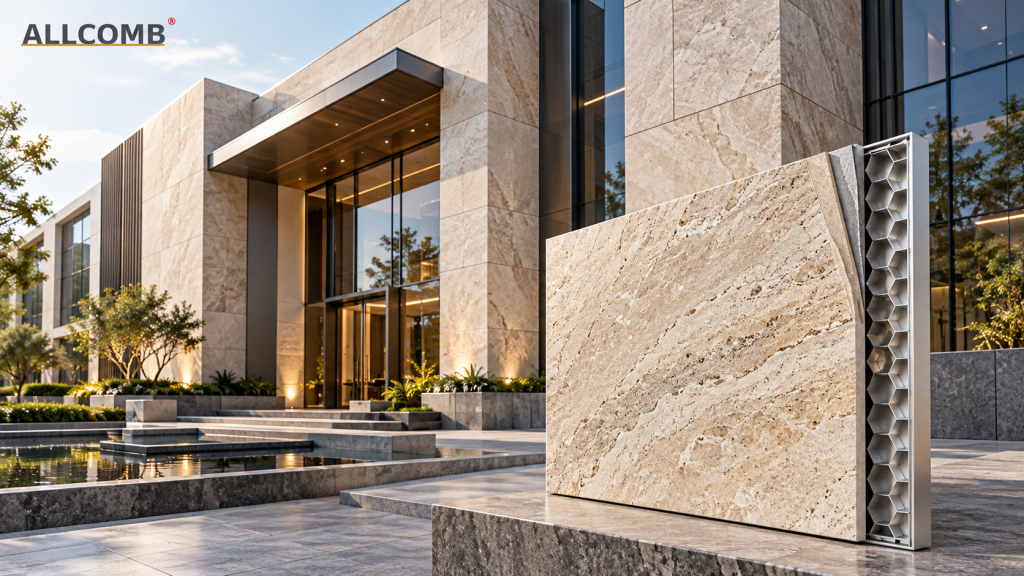
Aluminum honeycomb panels use a cellular core between face materials to create an engineered sandwich construction. Depending on the design, they can offer a useful balance of low weight and panel rigidity.
For suitable applications, these systems may combine aluminium faces or selected decorative surfaces with a honeycomb core. Learn more about aluminum honeycomb panels and their construction.
Benefits of Exterior Wall Cladding Panels
Architectural Design Flexibility
Cladding panels are available in different materials, colours, textures and formats. This gives architects flexibility when designing distinctive façades, entrance features, and exterior architectural details.
Potential Weight Reduction
Some engineered panel systems are designed to reduce weight compared with certain traditional solid-material constructions. Lower panel weight may support easier handling and installation, but the complete façade system must still meet structural and safety requirements.
Efficient Installation Planning
Prefabricated and custom-fabricated panels can help organize installation by providing components prepared to project-specific dimensions. Actual installation time depends on the façade design, site conditions, support structure, and fixing system.
Maintenance Considerations
The maintenance requirements of cladding vary by material, finish, exposure, and joint design. Selecting a suitable system and following the manufacturer’s maintenance guidance can help preserve the façade’s appearance and performance.
Where Are Exterior Cladding Panels Used?
Exterior wall cladding panels are used across a range of building types, including:
- Commercial offices and corporate buildings
- Hotels and hospitality developments
- Residential apartments and premium homes
- Retail centres and showrooms
- Educational and institutional buildings
- Entrance façades and architectural feature walls
Natural-stone designs may be particularly suitable for projects seeking a premium architectural appearance. Explore stone aluminum honeycomb panels for more information about engineered panels that combine stone surfaces with honeycomb backing.
How to Choose the Right Exterior Wall Cladding Panel
Before specifying a system, consider the building’s location, design intent, structural requirements and exposure conditions. Important factors include:
- Material and finish: Choose a surface appropriate for the architecture and expected maintenance.
- Weight and support: Confirm that the supporting structure and fixing system are suitable for the selected panels.
- Weather exposure: Assess rain, moisture, temperature changes, wind loads and corrosion risks.
- Fire performance: Verify compliance with applicable building regulations and project-specific fire requirements for the complete assembly.
- Installation system: Review joints, brackets, movement allowances, drainage and compatibility with the wall assembly.
- Manufacturer capabilities: Consider technical support, fabrication tolerances, quality control and project-specific requirements.
For projects exploring stone-based lightweight construction, our guide to lightweight stone panels explains another approach to architectural stone applications.
Exterior Wall Cladding Solutions from ALLCOMB PANEL
ALLCOMB PANEL specialises in engineered architectural panels that combine selected surface materials with honeycomb-core technology. These solutions can be considered for projects where surface appearance, panel weight and custom fabrication are important design factors.
The appropriate construction depends on the chosen surface, panel configuration, fixing method and intended application. For façade projects, coordination among the architect, manufacturer, façade consultant and installer is essential to ensure the complete system meets project requirements.
To understand the production side of engineered panel systems, explore how aluminium honeycomb panels are manufactured.
Conclusion
Exterior wall cladding panels give architects and building owners a wide range of options for creating modern, distinctive façades. Aluminium, metal, porcelain, natural stone and honeycomb-based panels each offer different advantages depending on the project.
The best choice balances architectural appearance with structural suitability, weather exposure, fire requirements, installation details and maintenance. By evaluating the complete cladding system rather than the surface material alone, project teams can make more informed decisions for long-term façade performance.
FAQs
1. What are exterior wall cladding panels?
Exterior wall cladding panels are materials fitted to a building’s external walls to create a finished façade and, as part of a properly designed system, help manage environmental exposure.
2. What are the different types of exterior wall cladding panels?
Common options include aluminium and metal panels, aluminium composite panels, natural stone, porcelain and engineered honeycomb panels. The right choice depends on the building design and technical requirements.
3. Are aluminium honeycomb panels suitable for exterior walls?
Some aluminium honeycomb panel systems are designed for exterior applications. Suitability depends on the complete panel construction, fixing system, weather exposure, fire performance and applicable building requirements.
4. Which exterior wall cladding panel is best for modern buildings?
There is no single best material for every project. Aluminium offers contemporary design flexibility, natural stone provides distinctive textures, porcelain offers varied finishes, and engineered honeycomb panels may offer weight-saving benefits.
5. Do exterior wall cladding panels require maintenance?
Yes, maintenance requirements vary by material, coating, joints and environmental exposure. Follow the product manufacturer’s inspection and cleaning recommendations.
6. What should be considered before installing exterior cladding panels?
Consider structural support, wind loads, panel weight, fire performance, weatherproofing, drainage, thermal movement, fixings and compliance with local building regulations.