

Marble has been associated with premium architecture for centuries. Its natural veining, colour variation and distinctive surface can transform a building façade or interior into a visually striking space.
However, traditional marble slabs can be heavy, particularly when used across large wall and façade areas. This has encouraged architects and designers to explore engineered alternatives that preserve the appearance of natural marble while reducing unnecessary weight.
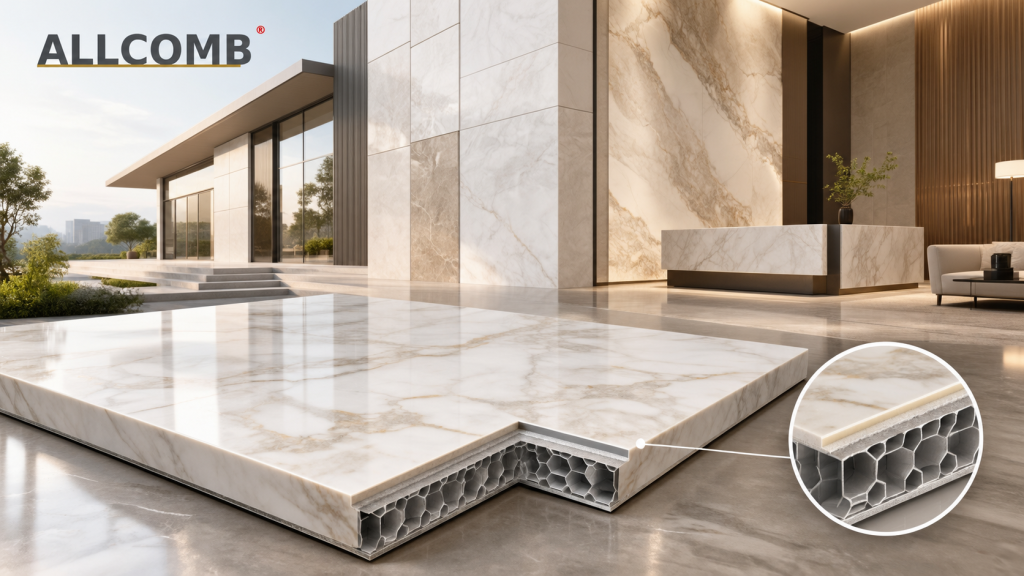
A marble honeycomb panel combines a thin marble surface with a lightweight aluminium honeycomb backing system. The result is an engineered panel designed to bring the appearance of natural marble into modern architectural applications while offering the advantages of lightweight panel construction.
What Is a Marble Honeycomb Panel?
A marble honeycomb panel is a composite architectural panel made by combining a thin marble surface with an aluminium honeycomb core and backing structure.
A typical panel construction may include:
- Natural marble surface
- Bonding layer
- Aluminium honeycomb core
- Aluminium backing sheet or engineered backing
The honeycomb core consists of repeating hexagonal cells. This structure helps provide rigidity while keeping the panel relatively lightweight.
Instead of making the entire panel from solid marble, the engineered construction uses marble as the visible architectural surface and a lightweight backing system behind it.
Why Use Honeycomb Construction with Marble?
Marble provides the aesthetic appeal, while the honeycomb structure provides an engineered lightweight construction.
This combination can be particularly useful for projects where designers want the appearance of natural marble without relying exclusively on thick, heavy slabs.
The resulting system can offer a balance between:
Natural marble aesthetics + lightweight construction + panel rigidity
This approach is relevant to modern architecture, where reducing material weight and improving installation efficiency can be important considerations.
Key Benefits of Marble Honeycomb Panels
- Lightweight Marble Construction
One of the main advantages of a marble honeycomb panel is its reduced weight compared with conventional full depth marble construction.
A lightweight panel can be easier to transport, handle and position during installation.
For large architectural projects, reducing the weight of individual panels can also be an important consideration when developing the overall cladding system.
- Premium Natural Marble Appearance
A honeycomb,backed panel does not need to sacrifice the visual qualities that make marble desirable.
Depending on the selected marble, the panel can showcase natural veining, colour variation and surface character.
This makes marble honeycomb panels suitable for luxury architecture where material appearance is a major design consideration.
- Large,Format Architectural Applications
Panelized marble systems can allow designers to create broad architectural surfaces with carefully planned joints and detailing.
Large,format applications can be particularly effective in:
- Luxury hotels
- Corporate interiors
- Residential developments
- Retail environments
- Commercial buildings
- Feature walls
- Premium façades
The final panel dimensions should be determined according to the manufacturer’s engineering capabilities and project requirements.
- Easier Handling
Reducing the weight associated with marble can make transportation and on,site handling more manageable.
This can be particularly valuable for projects involving large panels, difficult access conditions or renovation work.
- Design Flexibility
Marble honeycomb panels can be produced using different marble varieties, finishes, panel dimensions and backing configurations depending on the manufacturer’s capabilities.
This allows architects to develop solutions around the specific aesthetic and technical requirements of a project.
Where Are Marble Honeycomb Panels Used?
Interior Applications
Marble honeycomb panels can be considered for premium interior applications such as:
- Hotel lobbies
- Reception areas
- Feature walls
- Luxury residential interiors
- Retail stores
- Restaurants
- Corporate interiors
- Elevator surrounds
- Decorative wall surfaces
The combination of natural marble and lightweight construction can be particularly attractive in high,end interior design.
Exterior Applications
For exterior architecture, marble honeycomb panels may be considered for:
- Building façades
- Entrance features
- Architectural accent walls
- Commercial developments
- Hospitality projects
- Residential façades
Exterior applications require careful consideration of environmental exposure, fixing systems, structural requirements, fire performance and the complete façade assembly.
Marble Honeycomb Panels vs Solid Marble
The primary difference is the construction method.
A conventional marble slab contains substantial marble throughout its thickness. A marble honeycomb panel uses a thinner marble surface combined with an engineered backing system.
This can significantly change the weight and handling characteristics of the finished panel.
However, the two systems should not automatically be treated as interchangeable. The correct choice depends on the architectural design, structural requirements, installation method, performance criteria and project specifications. Stone Aluminum Honeycomb Panel
How to Choose the Right Marble Honeycomb Panel
Before specifying a marble honeycomb panel, architects and contractors should consider:
- Marble type and quality
- Marble thickness
- Honeycomb core specification
- Core density and cell size
- Panel thickness
- Face and backing materials
- Bonding system
- Surface finish
- Panel dimensions
- Fixing method
- Interior or exterior application
- Environmental exposure
- Fire,performance requirements
- Testing and certifications
The marble and honeycomb core should be evaluated as a complete engineered system rather than as separate materials.
Why Consider AllComb Panel?
AllComb Panel develops lightweight composite architectural panels combining natural materials such as stone and other specialty surfaces with advanced honeycomb,core technology.
Its manufacturing capabilities include custom fabrication and engineering support for architectural applications.
For projects seeking the appearance of natural marble combined with a lightweight engineered panel construction, a marble honeycomb panel can be an option worth evaluating.
Read more: AllComb Panel Stone Honeycomb Panels
Conclusion
A marble honeycomb panel combines the timeless appearance of natural marble with the lightweight characteristics of an engineered aluminium honeycomb backing system.
This construction can help architects and designers explore marble for large,format walls, façades, feature surfaces and premium interiors while considering weight, handling and installation requirements.
The right system depends on more than the marble itself. Core construction, panel dimensions, bonding, fixing, environmental exposure and required performance should all be evaluated before specification.
For modern architecture seeking to combine luxury natural stone with lightweight panel technology, marble honeycomb panels offer an engineered approach worth considering.
FAQs
What is a marble honeycomb panel?
A marble honeycomb panel is a composite architectural panel that combines a thin natural marble surface with an aluminium honeycomb core and backing system, read more: aluminium honeycomb core
Are marble honeycomb panels lighter than solid marble?
Yes, the engineered construction uses a thinner marble surface and lightweight honeycomb backing instead of making the complete panel from solid marble. This can significantly reduce panel weight.
Can marble honeycomb panels be used for façades?
They can be considered for exterior façade applications when the complete panel and fixing system are appropriately engineered for the project’s structural, environmental and performance requirements.
Can marble honeycomb panels be used indoors?
Yes. They can be considered for hotel lobbies, feature walls, luxury residences, retail spaces, reception areas and other premium interior applications.
What types of marble can be used?
The available marble depends on the manufacturer and panel system. Different marble varieties can potentially be incorporated depending on their suitability for the required panel construction.
What is the difference between a marble honeycomb panel and a marble slab?
A marble slab is primarily solid marble through its thickness. A marble honeycomb panel combines a thinner marble surface with a lightweight engineered honeycomb backing.
Are marble honeycomb panels suitable for large,format applications?
They can be suitable for large,format architectural applications, subject to panel dimensions, engineering, fixing requirements and the manufacturer’s production capabilities.
What should architects consider before specifying a marble honeycomb panel?
Important considerations include marble type, marble thickness, honeycomb,core specification, panel dimensions, bonding, fixing method, environmental exposure, fire requirements, testing and certifications

Pingback: Natural Stone Honeycomb Panel: Lightweight Stone Cladding - All Comb Panel
Pingback: Lightweight Stone Panel: Benefits, Applications & Guide